We’ve been working on a significant architectural improvement to BrainDrive: backend plugin support. This allows plugins to register their own REST API endpoints dynamically, without modifying the core codebase.
Why This Matters
Currently, BrainDrive plugins are frontend-only — they can add UI components but can’t provide server-side functionality. With backend plugin support, plugins will be able to:
- Register custom API endpoints
- Access server resources (databases, files, external APIs)
- Provide full-stack functionality without core PRs
This opens the door for more powerful community plugins and keeps the core lean.
What We’ve Built (Phases 1-4)
Core Infrastructure (Phase 1)
@plugin_endpoint()decorator for marking plugin routesPluginRouteLoaderfor dynamic route loading/unloading- Admin endpoint for controlled route reloading
- Atomic swap pattern to prevent disruption during reloads
Plugin Metadata (Phase 2)
- Database fields for
plugin_type(frontend/backend/fullstack) - Support for
endpoints_file,route_prefix, andbackend_dependencies - Repository methods for querying backend plugins
Plugin Manager Integration (Phase 3)
- Automatic route reload on install/enable/disable/uninstall
- Cascade disable: disabling a backend plugin auto-disables dependents
- Auto-install: installing a frontend plugin auto-installs required backends
Plugin Manager UI (Phase 4 - Just Completed!)
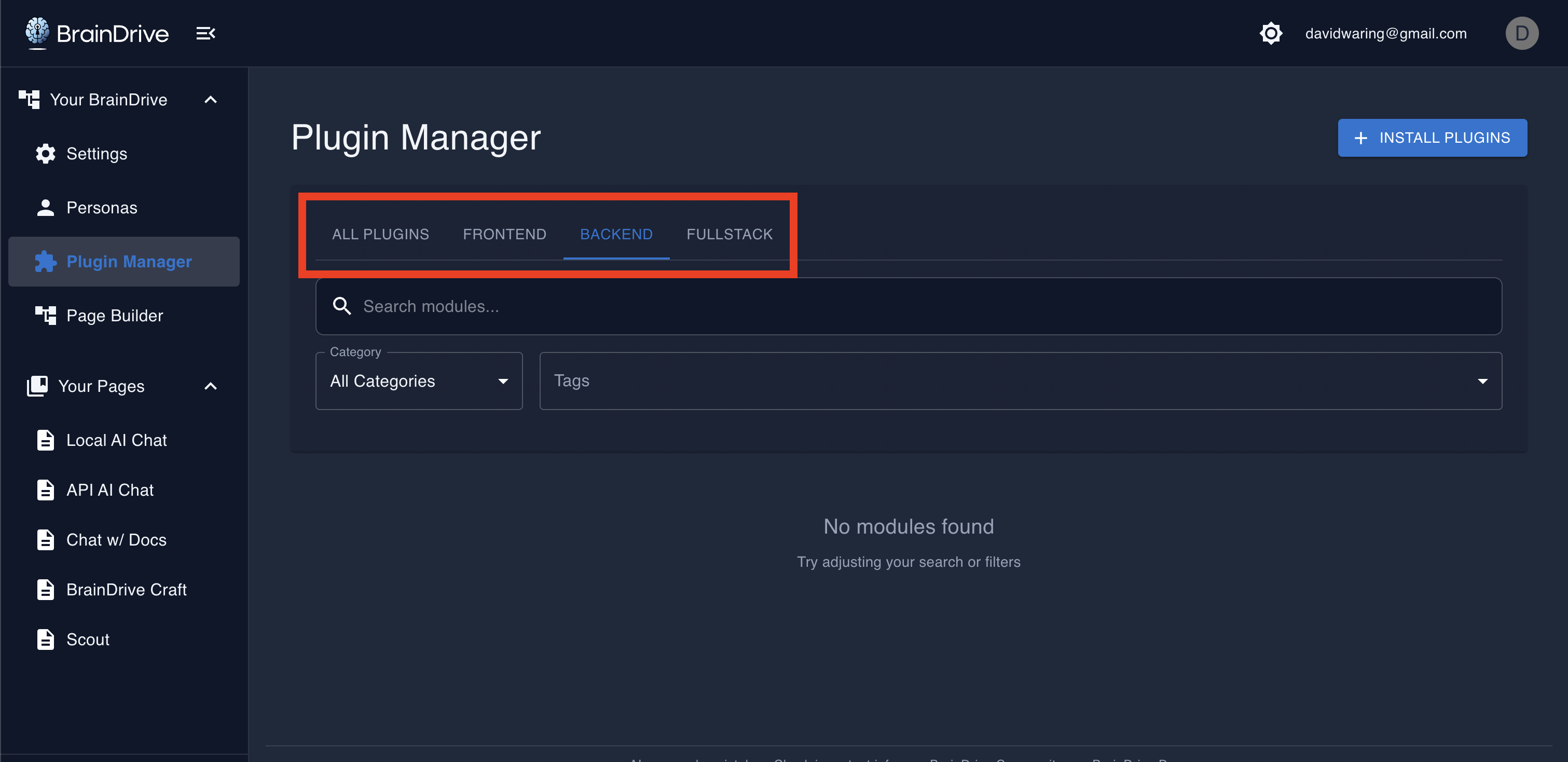
- Plugin type tabs: Filter by All/Frontend/Backend/Fullstack
- Backend badges: Visual distinction for backend and fullstack plugins
- Dependency display: See which plugins depend on each backend plugin
- Cascade disable warning: Confirmation dialog before cascade operations
- Security warnings: Alerts when installing backend plugins (they run server-side code)
What’s Next
Phase 5 will create the first real backend plugin: the Library Plugin. This will provide API endpoints for accessing the BrainDrive Library (project management, context retrieval for AI agents).
Phase 6 will add comprehensive testing and documentation.